


Odorous House Ants
Odorous House Ants are among the most challenging of ants to control. Odorous house ants turn up in the most unusual of places. They are very adaptable and create numerous colonies, nesting beneath ground debris including wood piles, bricks, mulch, loose bark, etc. They may also invade spaces in walls, below carpets, and baseboards, etc. Eliminating odorous house ants involves locating each ant colony and treating it directly.
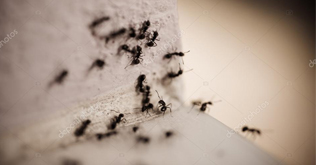
Pavement Ants
Pavement ants are one of the common ant species found. Pavement ants like to set up colonies beneath sidewalks and foundations and may also nest build beneath bricks, stones or compost heaps. You have probably seen these ants foraging for food crumbs on your kitchen counter or trailing around in your bathroom. Locating the actual nest of pavement ants can be difficult but is essential if they are to be eliminated.

Carpenter Ants
Carpenter ants like to colonise in wood and can cause extensive structural damage if left untreated. Carpenter ants have a vicious sting when disturbed, so be careful how you approach their nests. Looking for signs of sawdust or moisture problems in walls will lead you to where carpenter ants can be found. Whenever there is wood in contact with soil and there is more than 30% humidity in the wood, you have the potential for carpenter ants to infest the wood.

Odorous House Ants
Odorous House Ants have one node, one-sized workers about 3.5mm, uneven thoraxes, 12 antennal segments, no clubs, no circle of hair on tip of the abdomen and are brown to black in colour. An easy identification method is that workers give off rotten coconut smell when crushed. The node is flat in shape and is hidden by the abdomen.
Pavement Ants
Pavement ants have two nodes, worker size is about 3mm, uneven shaped thoraxes, 12 antennal segments, antennae clubs with 3 segments, and one pair of spines on the thorax. An easy way to distinguish them is that there are grooves present on the head and thorax. There is also a stinger present at the tip of the abdomen.
Carpenter Ants
Carpenter ants have one node, evenly rounded thoraxes, 12 antennal segments, worker size is about 10mm and abdomens have long yellow hairs with a circle of hairs at the tip of the abdomen. They can be identified their distinct single node, black bodies and dark red legs.