






Professional Fly Exterminator – Calgary – Fly Treatment Service
403-475-6523
Peregrine Pest Control – Fly Removal – Calgary & area
All our fly treatment technicians are licensed applicators in the province of Alberta.
Peregrine Pest Control is Quality Pro Certified and ISN Certified.
*Our Calgary fly removal team has 60+ years of combined experience
Check out the Peregrine Pest Control team here
WHAT TO LOOK FOR
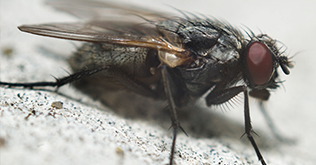
House Flies: suck liquids containing sweet or decaying substances. Larva feed on moist food rich in organic matter. In the summer months they are found outside in garbage, manure, anywhere there is decaying matter. The key to controlling house flies is to remove organic matter, ensure general sanitation is good, and to ensure screen doors are in place to keep all pests out.
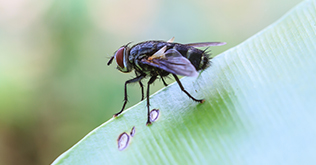
Cluster Flies: Cluster Flies typically, as the cool fall days approach, cluster flies gather together on the south and west sides of a building — they often gather close to windows and door frames, preparing to hibernate in gaps on the interior of the structure. On warm winter days, or as spring approaches, the cluster flies emerge and crawl across walls and windows, becoming more active as they warm up. They are attracted to light, so you may find collections of dead cluster flies lying beneath a left-on light bulb in an attic or near a window frame.
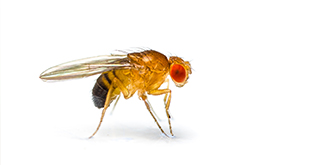
Small Flies: prefer a warm, moist environment with plenty of food. Food builds up in cracks and crevices. Many times, food is pushed down floor drains in the process of washing floors. The organic matter builds up over time, creating a perfect breeding ground for small flies. A regular cleaning program is required to take away the food source of small flies. This includes the hard-to-reach areas under counters and equipment. By removing the food source, you break the cycle of the small fly.
HOW TO IDENTIFY FLIES
House Flies: are 1/4 to 5/16 inch in size, medium to dark grey in colour, the prothorax has four dark stripes, the wing has sharp upward curve of the fourth vain and the calypter is bare with no tuft of hairs present. House flies are prolific breeders and are readily found around livestock and man-made dwellings. It is the most common fly throughout the world.
Cluster flies: are 1/4 to 3/8 inch in size, dark grey in colour, have golden yellow hairs on front part of the thorax, hold their wings flat over their back when resting and have wingtips that overlap. When crushed, they give off an odour of buckwheat honey and they breed outdoors in lawns and fields.
Small Flies: are most commonly species of fruit flies and moth flies. They feed off organic matter. Moth flies are 3/16 inch in size, generally brown to gray or gray-black in colour, with a unique vein pattern on wings, their body and wings are covered with tiny hairs. Fruit flies are 1/8 inch in size, have a tan-coloured head and thorax, have bright red eyes and have no markings on top of the prothorax.
OUR SOLUTION
Solving fly issues is hard work and requires persistent effort to be successful — it requires understanding the cause of why flies are present. Additionally, the willingness of the client to change poor behaviour practices is often key to solving fly issues long term. The first part is to identify the species of flies that is the challenge. At Peregrine, we have the right pest control tools and knowledge to solve the most persistent fly issue. Our pest control service technicians prefer to use foaming agents, dusts, commercials vacuums, and fogging agents in combating fly problems. This in conjunction with educating our clients about removing moisture issues, fixing broken pipes, fixing broken floor tiles, sealing gaps or cracks that either hold moisture or organic matter. Remove the fuel and you eliminate your fly issue once and for all.
COMMON CONCERNS
Why are small fly issues in restaurants reoccurring?
Small fly issues in restaurants are reoccurring for a number of reasons. The main reason is poor sanitation. Areas that are out of sight of the customer are usually the last areas that are cleaned. Very rarely is it just one thing that isn’t cleaned that causes small fly issues. Everything requires maintenance. This means fixing broken floor tiles, cleaning floor drains and cleaning the hard to reach areas. All these areas trap moisture and organic matter. Are the mop heads changed on a regular basis? Or are you just spreading grease every time you mop the floor? Interestingly, even with poor sanitation if you do just one thing you can significantly reduce a small fly problem. Remove the moisture. Warm moist areas equal high fly activity. Remove the moisture and you can solve an active fly problem.
Why are Cluster fly issues reoccurring?
Regrettably cluster flies are a reoccurring nuisance. Cluster flies are one of the few insects where you can only treat the adults. Cluster flies lay their eggs on the soil. Earthworms come along and eat the eggs. The cluster flies then pupate from the earth worm and fly to the nearest structure. This is a cycle that is difficult to break. Cluster flies prefer the south side of a structure. In the early summer, once the flies have left the structure, sealing gaps on the exterior can significantly reduce the potential nesting sites. Entry points include gaps in window frames, doors frames, and any fixture on the exterior of the structure. A multi-prong approach of sealing and chemical applications is required to win the day over an extended period of time.
Professional Fly Exterminator – Calgary – Fly Treatment Service
403-475-6523
Peregrine Pest Control – Fly Removal – Calgary & area
All our fly treatment technicians are licensed applicators in the province of Alberta.
Peregrine Pest Control is Quality Pro Certified and ISN Certified.
*Our Calgary fly removal team has 60+ years of combined experience
Check out the Peregrine Pest Control team here

Overall rating of 350+ Google reviews
4.8 out of 5 STARS